Subterranean termites (*Reticulitermes flavipes*) represent the primary structural timber threat across Hall County. Grand Island properties built near the Platte River corridor and high-water-table areas, including…
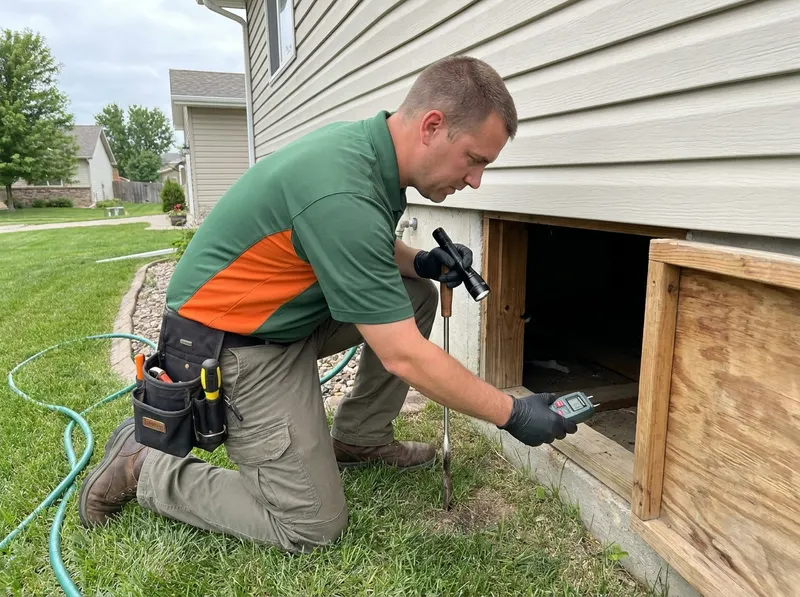
Subterranean termites (*Reticulitermes flavipes*) represent the primary structural timber threat across Hall County. Grand Island properties built near the Platte River corridor and high-water-table areas, including Stolley Park, Pier Park, and Prairie Creek, frequently experience soil moisture levels that support large underground colonies. Subterranean workers construct mud shelter tubes over masonry to bridge the gap between damp subterranean soil and dry structural framing. An assessment systematically probes the sill plate, rim joists, subflooring, and basement support posts, cataloging shelter tubes, discarded alate swarmer wings, pinhole drywall perforations, and frass deposits.
Older foundations in Downtown Grand Island Railside, Broadwell, and East Park often feature stacked stone, hollow-block masonry, or direct earth-to-wood ground contact near porch steps. These configurations provide direct highway access for subterranean workers that remain concealed behind finished walls. Newer construction in Northwest Grand Island and the Indianhead Golf Course area commonly utilizes poured concrete stem walls, yet expansion joints, bath traps, and utility conduit penetrations remain vulnerable to entry gaps as narrow as 1/32 of an inch. A visual and acoustic probe inspection isolates active structural infestations from previous inactive damage, ruling out misidentified carpenter ant excavation or powderpost beetle exit holes.
Property owners evaluating inspection methods face a choice between rapid surface-only evaluations and invasive structural diagnostics. A standard physical inspection uses non-destructive physical sounding along structural members, thermal differential scans, and localized pin probing. If sub-slab activity is indicated beneath finished living areas in Capital Heights or Darr, drilling small exploratory ports through mortar joints allows optical borescope confirmation without drywall demolition. Standard real estate transactions across Hall County require the complete NPMA-33 Wood Destroying Insect report, which provides documented evidence of active infestation, past control treatments, or unobstructed zones that require corrective clearance.
Every job gets a firm, written price after a free on-site visit.
Tell us about your termite inspections job in Grand Island and we'll send a clear, written quote, usually the same day.
 Kervexa Pest Defense