Surface aerosol sprays purchased in retail aisles disperse worker ants through a defensive mechanism known as budding, multiplying a single localized nesting issue into three distinct wall voids. Professional colony…
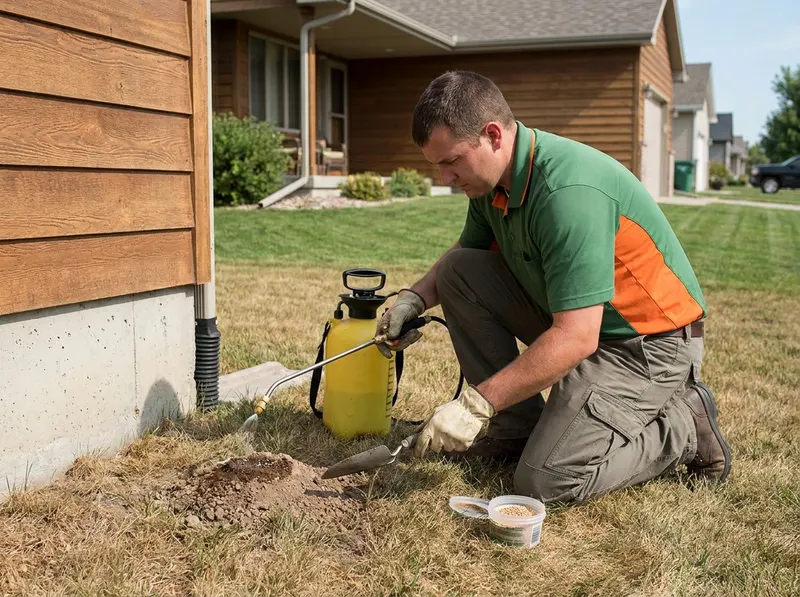
Surface aerosol sprays purchased in retail aisles disperse worker ants through a defensive mechanism known as budding, multiplying a single localized nesting issue into three distinct wall voids. Professional colony eradication relies on undetectable, non-repellent liquid actives and species-calibrated granular baits. Foraging workers traverse treated micro-zones near foundation footings, gather the active compounds, and return them into the central gallery. Through habitual social grooming and food sharing (trophallaxis), workers deliver lethal doses directly to the reproductive queen, collapsing the biological engine of the colony within two weeks without releasing airborne propellants into living areas.
In Hall County, local soil profiles and structural designs directly influence pest species behavior. Properties bordering older tree canopies in Stolley Park, East Park, and Capital Heights frequently encounter carpenter ants excavating softened sill plates and window headers where roof runoff creates damp structural framing. Conversely, residences near Indianhead Golf Course, Pier Park, and sandy subsoils along the Prairie Creek neighborhood commonly develop extensive pavement ant and odorous house ant colonies beneath poured concrete patios, sidewalk expansion joints, and basement slabs. Properties in the Downtown Grand Island Railside district face sub-slab voids where colonies exploit steam lines and interior utility penetrations.
Targeted perimeter defense fits situations where persistent trails emerge along baseboards, beneath kitchen sinks, or through basement foundations, making localized repellents ineffective. A standalone perimeter barrier prevents exterior colonies from utilizing exterior weep holes, while structural void injection neutralizes moisture-seeking satellite nests inside insulated assemblies. Technicians confirm that children and family pets remain off treated exterior zones until liquid applications fully dry, typically requiring 60 minutes. Direct dispatch operates via (308) 403-1312, establishing single-event remediation without locking homeowners into recurring annual contracts.
Every job gets a firm, written price after a free on-site visit.
Tell us about your ant colony elimination job in Grand Island and we'll send a clear, written quote, usually the same day.
 Kervexa Pest Defense