Commercial facilities face distinct structural vulnerabilities due to high foot traffic, municipal drainage proximity, and constant loading-dock throughput. Food production plants near Northwest Grand Island and…
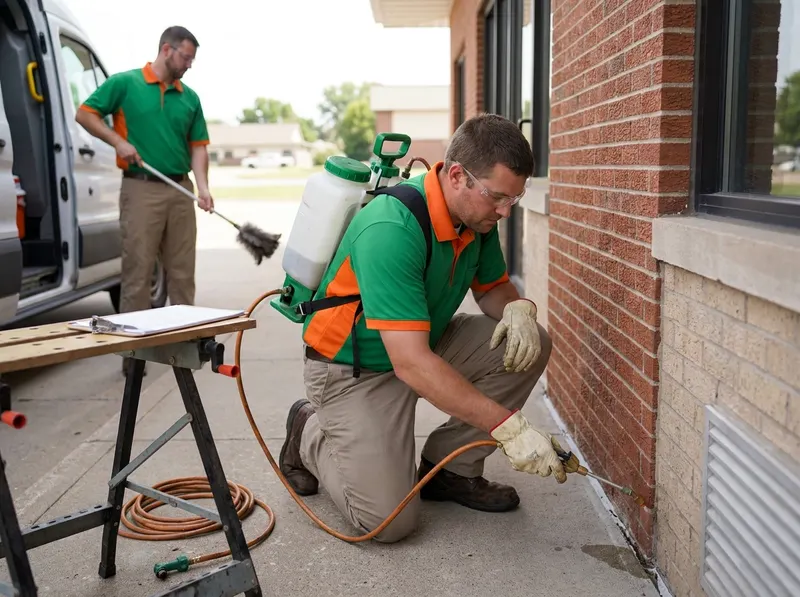
Commercial facilities face distinct structural vulnerabilities due to high foot traffic, municipal drainage proximity, and constant loading-dock throughput. Food production plants near Northwest Grand Island and warehouse hubs along Broadwell encounter heavy pressure from Norway rats (Rattus norvegicus) and house mice (Mus musculus), which gain entry through door sweeps worn past the 0.25-inch threshold. Standard reactive spraying does not halt established rodent pathways or subterranean insect colonies. Instead, clinical pest defense relies on physical barrier exclusion, deploying stainless steel mesh and non-silicone architectural elastomeric sealants along foundation penetrations, expansion joints, and utility conduits before establishing a 3-foot vertical and 10-foot horizontal exterior perimeter defense zone.
Operations along the Downtown Grand Island Railside district and hospitality venues surrounding Fonner Park and the Heartland Events Center encounter elevated risks of German cockroach (Blattella germanica) infestations within commercial kitchen equipment, grease traps, and plumbing chases. A single breeding pair introduces 30 to 48 nymphs per ootheca every 28 days, creating rapid operational disruption. Treatment protocols bypass generic space sprays, which often trigger behavioral budding in insect colonies, in favor of targeted non-repellent insect growth regulators (IGRs) combined with microencapsulated suspensions applied precisely into void spaces. This ensures biological control without contaminating open food-handling surfaces or off-gassing into consumer spaces.
Decision parameters balance standalone spot applications against perimeter defense programs. If a facility shows localized entry without interior colonization, exterior exclusion and perimeter defense maintain operational compliance. If interior nesting is active across storage racking in an East Park distribution center or a processing site near Stolley Park, targeted interior void injection must accompany physical dock sealing. Trade-offs center on operational clearance versus ingress velocity: perimeter bait stations require a 14-day cycle to clear heavy external rodent runs, whereas internal mechanical trapping delivers immediate capture metrics without exposing bait to sensitive interior work environments. Every intervention includes documented regulatory logbooks conforming to FDA, USDA, and local Hall County public health standards.
Every job gets a firm, written price after a free on-site visit.
Tell us about your commercial pest defense job in Grand Island and we'll send a clear, written quote, usually the same day.
 Kervexa Pest Defense