Kervexa Pest Defense logoKervexa Pest Defense
Fast, upfront pest control service in Grand Island, NE, free quote in minutes

Pest Control Service Grand Island

Securing a residential structure against wood-destroying organisms, disease-bearing rodents, and invasive insect colonies requires a calibrated pest control service in Grand Island. Properties throughout Hall County face sustained biological pressures driven by seasonal moisture shifts along the Platte River basin and extensive surrounding agricultural cultivation.

Get your free pest control service quote, Grand Island

We only use your ZIP to check availability, no spam.

Termite InspectionsTermite TreatmentsGeneral Pest Control
Pest Control Service in Grand Island, NE
Pest Control Servicein Grand Island, NE

What is Pest Control Service in Grand Island, NE?

Pest Control Service in Grand Island is an integrated biological eradication and structural exclusion protocol designed to eliminate active insect and rodent colonies from Hall County residential and commercial structures.

Why Grand Island homeowners choose Kervexa Pest Defense

  • Baseline diagnostic inspections and targeted barrier treatments throughout Grand Island carry an established starting minimum of $250.
  • Termite emergence along the Platte River corridor peaks from April through May, requiring sub-slab and perimeter termiticide barriers.
  • Fall rodent migrations into residential foundations begin in September as corn and soybean harvesting removes field habitats across Hall County.
  • Treatment protocols utilize EPA-registered active micro-encapsulated formulations applied deliberately to exterior perimeters, crawlspaces, and entry voids to minimize indoor chemical presence.
Termite Inspections
Termite Treatments
General Pest Control
Our Expertise

Pest Control Service services in Grand Island

Every service reflects the same meticulous attention to detail, whether it's a single job or a larger pest control service project across Grand Island.
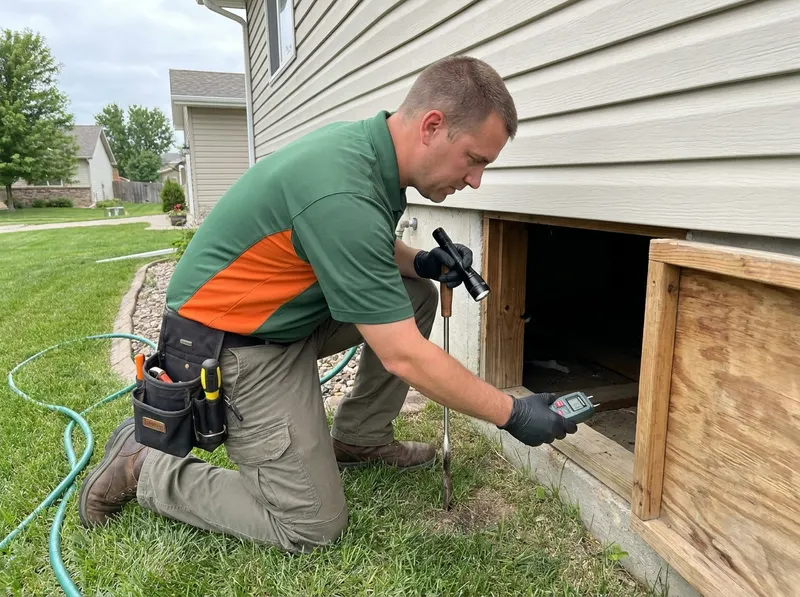
Termite Inspections in Grand Island, NE

Termite Inspections

Comprehensive structural assessments targeting subterranean termite galleries, mud tubes, and structural wood moisture along sill plates and foundation footings. Inspections include sounding structural timbers, moisture meter verifications, and formal real estate reporting across residential crawlspaces and basements. Technicians identify hidden shelter tubes ascending concrete stem walls, examine rim joists for hollowed cellulose damage, and assess soil moisture levels adjacent to basement walls. Every inspection documents structural risk factors including negative grade slope, direct wood-to-soil contact, and plumbing penetrations passing through poured concrete slabs.

Get a quote →
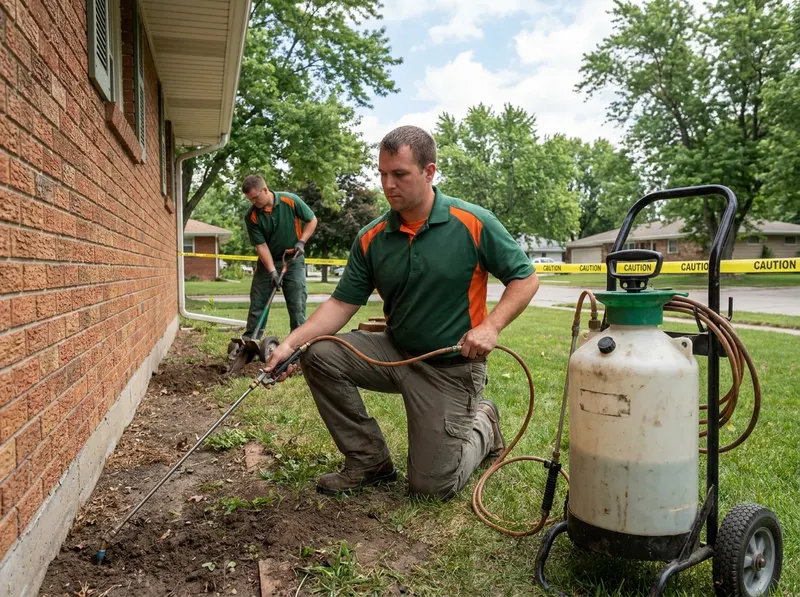
Termite Treatments in Grand Island, NE

Termite Treatments

Sub-surface trenching, perimeter soil saturation, and sub-slab injection of EPA-registered non-repellent termiticides to sever colony contact between subterranean moisture pockets and structural framing. Barrier zones prevent subterranean workers from entering structural lumber, halting cellulose consumption. Technicians trench exterior foundation perimeters to a depth of six inches, saturate the backfill soil with long-chain termiticide solutions at four gallons per ten linear feet, and mechanically core concrete slabs to establish unbroken horizontal protective zones beneath porches and attached garages.

Get a quote →
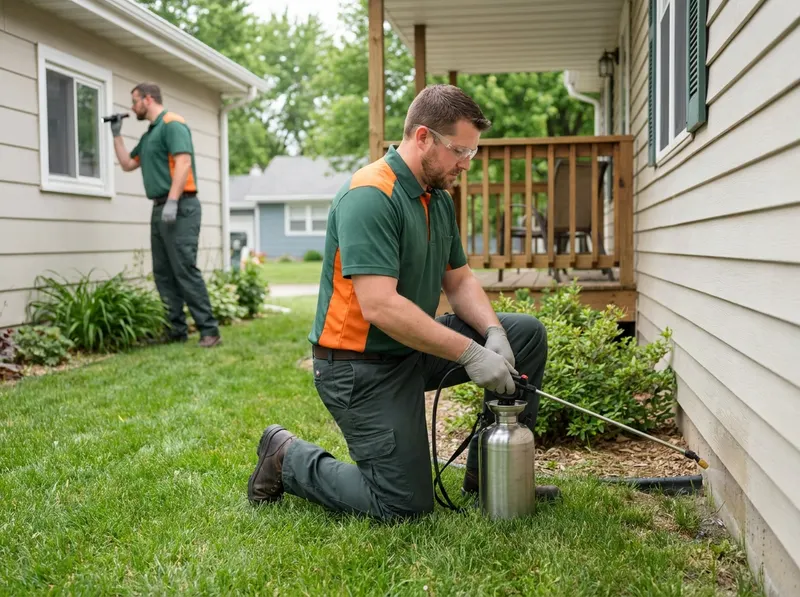
General Pest Control in Grand Island, NE

General Pest Control

Defensive exterior perimeter barrier application extending three feet up the foundation wall and two feet out along the soil perimeter. Targets earwigs, centipedes, ground spiders, crickets, and seasonal perimeter invaders before structural breaches occur. Micro-encapsulated suspensions adhere to rough masonry, aggregate siding, and foundation footings, withstanding ultraviolet exposure and precipitation. Technicians simultaneously clear accessible spider webs, treat exterior window wells, and clear crawlspace weep holes to prevent foundation wall migrations into living spaces.

Get a quote →
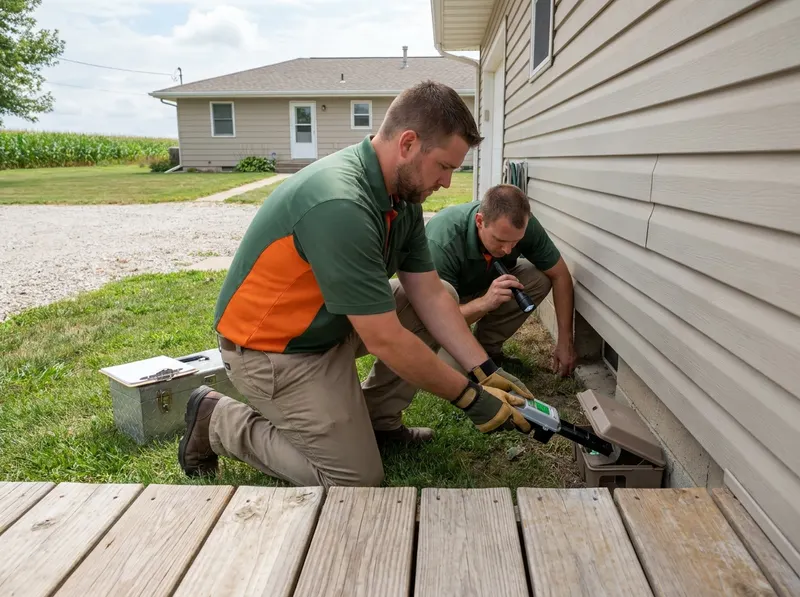
Rodent Control in Grand Island, NE

Rodent Control

Mechanical entry suppression, run-path trapping, and tamper-resistant exterior bait containment addressing Norway rats and house mice. Protocols seal foundation gaps exceeding 1/4 inch, weeping vents, and utility pipe penetrations to prevent seasonal recolonization. Technicians install high-tensile copper mesh, galvanized hardware cloth, and metal-reinforced sealants along garage door sweeps, exterior air conditioning conduit chases, and daylight basement windows. Interior snap-trap lines along identified perimeter runways remove active populations inside basements without broadcasting interior rodenticides.

Get a quote →
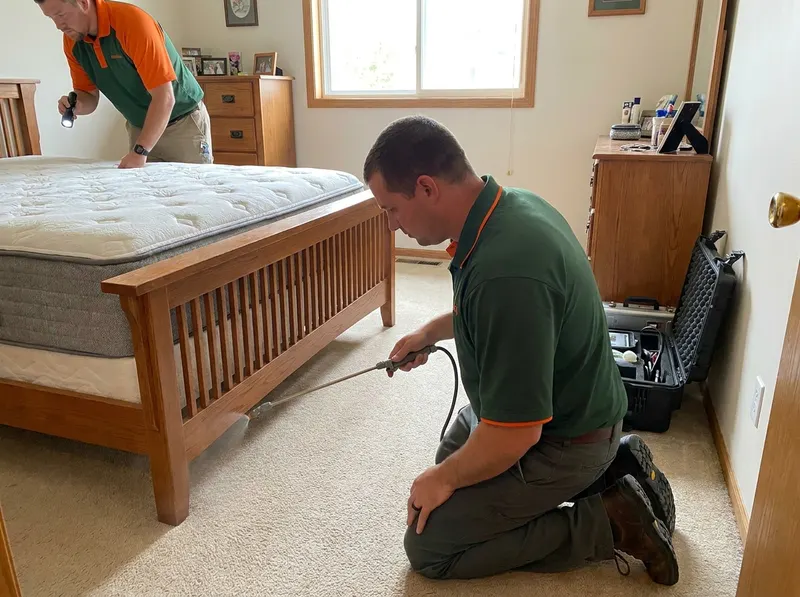
Bed Bug Treatments in Grand Island, NE

Bed Bug Treatments

Eradication protocol combining thermal exposure above lethal thermal thresholds (122°F) with precision placement of non-pyrethroid residual insect growth regulators and desiccants. Targets harborages in mattress seams, bed frames, electrical faceplates, and interior perimeter baseboards. Mobile thermal heating units distribute recirculated high-temperature airflow throughout affected bedrooms, penetrating dense mattresses, hollow furniture legs, and structural wall framing to achieve complete thermal mortality across egg, nymph, and adult life stages without repetitive aerosol spraying.

Get a quote →
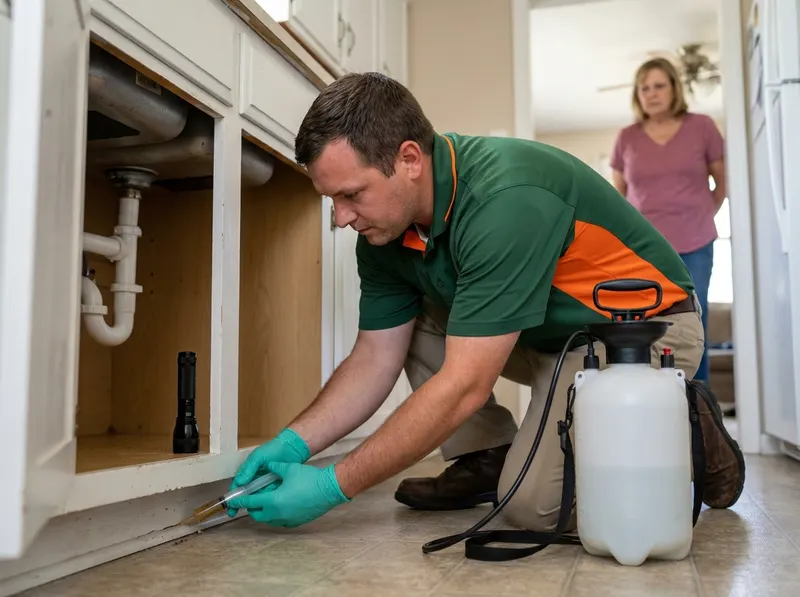
Cockroach Control in Grand Island, NE

Cockroach Control

Systematic elimination of German (Blattella germanica) and Oriental (Blatta orientalis) cockroach populations utilizing insect growth regulators (IGRs) and localized active baits in mechanical voids, plumbing conduits, and dark motor housings. Treatments target refrigerator compressor compartments, under-sink plumbing collars, and interior cabinetry hinge voids. Insect growth regulators prevent nymphs from successfully molting into reproductive adults, collapsing colony populations within four to six weeks while avoiding broad aerosol contamination in food preparation spaces.

Get a quote →
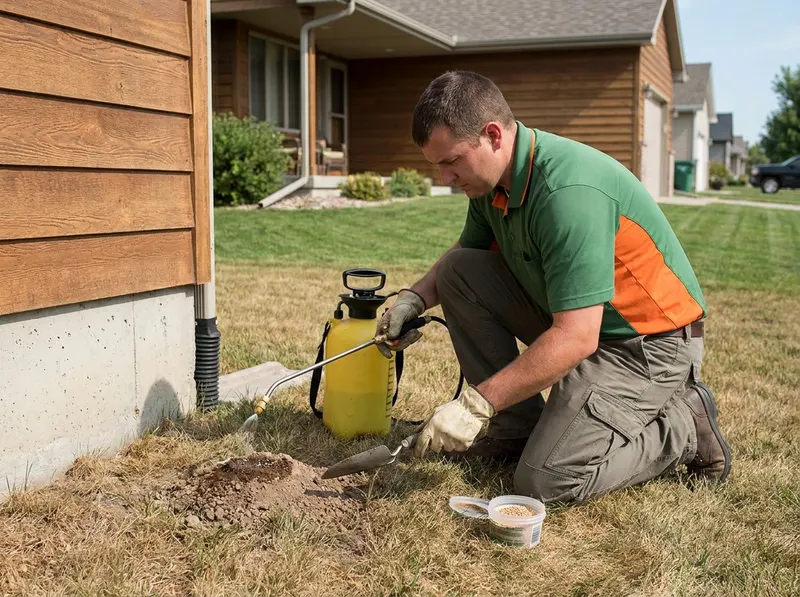
Ant Colony Elimination in Grand Island, NE

Ant Colony Elimination

Targeted eradication of carpenter ants (Camponotus pennsylvanicus), odorous house ants, and pavement ants utilizing specialized delayed-toxicity baits that foraging workers transport into interior satellite nests and primary subterranean queens. Technicians identify trail networks entering along tree branches, exterior ledger boards, and window headers. Liquid and granular baits utilize slow-acting active ingredients that workers share through trophallaxis, neutralizing concealed reproductive queens nesting deep inside damp structural wood or exterior landscape ties.

Get a quote →
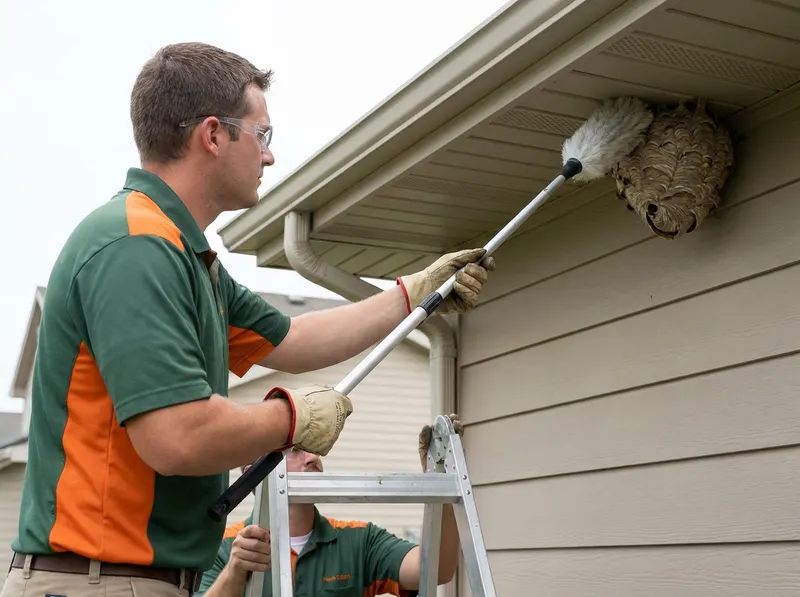
Wasp and Hornet Nest Removal in Grand Island, NE

Wasp and Hornet Nest Removal

Direct mechanical removal and targeted knockdown of aerial paper wasp, bald-faced hornet, and yellowjacket nests situated under roof eaves, soffits, deck joists, and structural fascia before seasonal defensive aggression peaks. Pressurized non-conductive aerosol applications deliver immediate knockdown of active defensive adults, followed by physical removal of the protective papery combs to prevent secondary carpet beetle infestations and eliminate chemical pheromone traces that attract future nesting queens to the same eaves.

Get a quote →
The essentials

What Grand Island customers should know

  • Baseline diagnostic inspections and targeted barrier treatments throughout Grand Island carry an established starting minimum of $250.
  • Termite emergence along the Platte River corridor peaks from April through May, requiring sub-slab and perimeter termiticide barriers.
  • Fall rodent migrations into residential foundations begin in September as corn and soybean harvesting removes field habitats across Hall County.
  • Treatment protocols utilize EPA-registered active micro-encapsulated formulations applied deliberately to exterior perimeters, crawlspaces, and entry voids to minimize indoor chemical presence.
  • Service engagements operate without mandatory 12-month auto-billing subscriptions, providing focused treatments directly addressing target organisms.
The Kervexa Pest Defense standard

Why Grand Island keeps calling us back

01

A clear, written price

You get a firm, itemized quote for your pest control service before any work begins, no surprises, no pressure.

02

Your property, protected

Careful prep, tidy work, and a full cleanup when we are done. We treat your home and belongings like our own.

03

One crew, start to finish

The same trusted, background-checked team from the first call to the final check.

Buyer's guide

Choosing the right pest control service pro in Grand Island

Selecting appropriate intervention protocols depends on the biological profile of the target organism, structural vulnerabilities of the property, and the required persistence of residual barriers. If subterranean termites (Reticulitermes flavipes) are detected during inspection near mud tubes or compromised foundation framing, select non-repellent perimeter liquid trenching or targeted sub-slab injection rather than standalone surface sprays or perimeter bait placements. Non-repellent active ingredients (such as fipronil) permit worker termites to pass through the treated zone undetected, transferring the toxicant back to the subterranean reproductive core via grooming behaviors, whereas topical contact repellents merely divert colonies to adjacent untreated foundation sills.

The operational trade-off centers on initial deployment labor and mechanical drilling through exterior concrete pads versus the speed of complete colony eradication. If rodent activity involves Mus musculus (house mouse) or Rattus norvegicus (Norway rat) inside wall voids, select physical structural exclusion alongside tamper-resistant mechanical capture stations instead of interior broadcast rodenticide baits. Interior broadcast baiting risks secondary off-target hazards and subterranean carcasses decaying within unsealed dry-wall cavities; structural exclusion requires comprehensive exterior sealing using 1/4-inch galvanized steel wire mesh and elastomeric expanding compounds.

The operational trade-off involves greater upfront mechanical labor inspecting rooflines, crawlspace vents, and foundation masonry joints versus relying on repetitive toxicant distribution. If Cimex lectularius (bed bugs) infest sleeping quarters or baseboards, select targeted high-heat thermal remediation combined with non-pyrethroid residual compounds over repetitive aerosol surface misting. Thermal protocols raise ambient wall and furniture temperatures to 122°F (50°C) for sustained durations, denaturing protein structures across all life cycles (including eggs), whereas standard retail store-bought pyrethroids encounter widespread enzymatic resistance and scatter the insects deeper into electrical boxes and adjacent rooms.

If German cockroaches (Blattella germanica) occupy kitchen cabinetry, wall voids, or motor housings, select targeted abamectin or indoxacarb gel bait matrices paired with insect growth regulators (such as pyriproxyfen) instead of broadcast aerosol foggers. Insect growth regulators disrupt chitin synthesis and juvenile hormone balance, rendering nymphal stages sterile upon molting, whereas contact aerosol foggers trigger behavioral dispersal, scattering breeding females into adjoining wall voids and living spaces.

Investment

Pest Control Service cost in Grand Island

Every project gets a firm, written price after a free on-site visit. Ranges below for orientation.

Initial Diagnostic Inspection & Perimeter Barrier Treatment$250, $385
Targeted Termite Liquid Barrier Injection (Per Linear Foot / Structure)$850, $2,400
Physical Rodent Exclusion & Structural Sealing (Basement / Foundation)$350, $750
Comprehensive Bed Bug Thermal & Precision Chemical Remediation$750, $1,800
Targeted German Cockroach Cleanout & Growth Regulator Application$285, $450
Specialized Wasp / Hornet Nest Physical Knockdown & Void Treatment$250, $395
Exterior Flea & Tick Turf Perimeter Barrier Suppression$275, $450
Commercial Grain & Pantry Stored Product Pest Elimination$325, $550
Residential Crawlspace Moisture & Subterranean Wood Defense$450, $950
Free, no-pressure estimate

Get it done right

Tell us about your pest control service job and we'll send a clear, written quote, usually the same day. Or just call and talk to a real Grand Island pro.

(308) 403-1312

Get your free pest control service quote, Grand Island

We only use your ZIP to check availability, no spam.

Where we work

Areas we serve near Grand Island

Kervexa Pest Defense pest control service team in Grand Island, NE

Properties across Grand Island encounter unique structural pest pressures due to high alluvial water tables running parallel to the Platte River and extensive agricultural field perimeters lining Hall County. Subterranean termites find sustained subterranean hydration within sandy-loam soils near Stolley Park and Mormon Island State Recreation Area, driving aggressive spring flights into residential structural timber across older housing stock and modern slab constructions alike. Along the U.S. Highway 30 corridor and Broadwell Avenue, established commercial properties and historical homes frequently battle moisture-seeking carpenter ants nesting within soft structural framing. Additionally, autumn combine harvesting across thousands of acres of corn and grain fields surrounding Northwest Grand Island, Capital Heights, and Prairie Creek abruptly dislodges large field rodent populations. House mice and Norway rats move in sustained vectors toward residential foundations, exploiting foundation vents, plumbing stacks, air conditioning chase lines, and garage threshold seals near Fonner Park and the Nebraska State Fairgrounds. During summer, backwater sloughs and irrigation reservoirs near Island Oasis Water Park and Stuhr Museum of the Prairie Pioneer fuel dense swarms of exterior perimeter invaders, including midges, spiders, and paper wasps nesting under broad residential eaves.

Pier ParkStolley ParkBroadwellEast ParkNorthwest Grand IslandDarrIndianhead Golf Course areaCapital HeightsPrairie Creek neighborhoodDowntown Grand Island Railside
Questions

Common questions

What is the starting baseline cost for pest control service in Grand Island?
Professional diagnostic inspection and exterior barrier treatment services in Grand Island begin at an established minimum of $250. This base tier covers complete perimeter assessment, targeted exterior residual application along the structure's footing, and mechanical clearing of accessible primary spider harborages and wasp nests. Comprehensive structural infestations involving subterranean termite trenching, multi-room bed bug thermal eradication, or extensive rodent exclusion run from $350 to $2,400, depending on linear perimeter footage and structural complexity. Exact quotes are finalized during an on-site structural assessment.
Are residual perimeter chemical treatments safe for domestic animals and children?
Technicians utilize EPA-registered micro-encapsulated formulations designed for low-toxicity, targeted application to exterior building materials, crawlspaces, and structural crevices. Once perimeter barrier sprays dry thoroughly, a process that typically requires 60 to 90 minutes in dry conditions, the active micro-capsules bind directly to soil, masonry, and siding surfaces without aerosolizing into interior living environments. Interior treatments prioritize targeted gel baits and enclosed mechanical exclusion stations located behind appliance voids or within locked boxes to eliminate accidental exposure for pets or family members.
How does pest control service in Grand Island adjust for seasonal shifts?
Intervention schedules mirror regional insect life cycles and agricultural developments in Hall County. Spring protocols (April through June) focus heavily on subterranean termite swarm emergence and carpenter ant colonization along high-moisture foundation sills near the Platte basin. Summer protocols (July through August) target exterior perimeter defenses against outdoor field ants, spiders, and stinging wasps nesting along rooflines. Fall and early winter protocols (September through November) center on structural rodent exclusion and foundation perimeter sealing as agricultural grain harvesting across surrounding rural fields forces mice and rats toward residential crawlspaces.
Are property owners forced into mandatory 12-month service contracts?
Properties do not require mandatory long-term, auto-billing subscriptions to receive corrective pest eradication treatments. Initial diagnostic appointments address active colonies and entry points directly under standalone single-service or targeted multi-stage biological follow-up scopes. Homeowners choose whether to engage seasonal perimeter defensive visits based entirely on structural vulnerability, past infestation history, and nearby environmental conditions.
Why do store-bought traps and aerosol sprays consistently fail against active infestations?
Retail insect sprays contain broad-spectrum contact repellents (typically pyrethroids) that eliminate only the small percentage of foraging worker insects exposed directly to the mist. This sudden localized mortality triggers defense dispersal or 'budding' mechanisms in social insects like German cockroaches and ants, fracturing the single colony into multiple remote nests distributed throughout interior wall voids. Professional barrier techniques deploy non-repellent transfer chemistry and insect growth regulators that foraging workers carry into inner harborages, halting reproduction and neutralizing the primary queen.
What visible evidence distinguishes subterranean termite swarms from flying ants in Grand Island homes?
Subterranean termites possess straight, beaded antennae, a uniform thick waist without abdominal constrictions, and four equal-length translucent wings that easily shed upon landing near window sills or foundation walls. Flying carpenter ants feature elbowed antennae, a distinctly pinched three-segment waist (pedicel), and unequal wing pairs where forewings extend noticeably longer than hindwings. Additionally, subterranean termites construct muddy earthen shelter tubes across foundation footings to retain moisture, whereas flying ants do not produce earthen masonry tubes.
How quickly can high-heat thermal remediation eliminate a bed bug infestation?
Targeted thermal bed bug remediation operates within a single treatment session lasting between six and ten hours. Industrial electric or indirect-fired heating units elevate room air temperatures between 122°F and 135°F, sustaining lethal heat throughout mattress cores, wall voids, baseboards, and deep upholstery fabrics for at least three consecutive hours. This process denatures vital cellular proteins across all life stages simultaneously, including desiccating heat-resistant eggs, achieving complete eradication without requiring multiple chemical broadcast sprays.
What physical entry points do mice exploit when invading Grand Island foundations during fall harvest?
Commensal house mice can squeeze through exterior openings measuring only one-quarter inch in diameter, approximately the width of a standard pencil. Common vulnerability points across Grand Island basements include deteriorated corner mortar, unsealed spaces surrounding exterior air-conditioner coolant lines, damaged rubber garage door bottom sweeps, open crawlspace weep vents, and gaps where natural gas supply pipes enter exterior siding. Sealing these entryways requires non-chewable materials like copper mesh, heavy galvanized steel hardware cloth, and metal-embedded sealants.
Can structural crawlspace moisture accelerate insect damage in Hall County residences?
High ambient soil moisture beneath homes along the Platte River floodplain raises relative humidity inside unencapsulated crawlspaces above 70%, creating ideal wood moisture content levels exceeding 18%. This elevated moisture softens dimensional joists, encouraging subterranean termites and wood-boring powderpost beetles to consume cellulose framing without facing desiccation. High crawlspace humidity also attracts heavy colonies of silverfish, camel crickets, millipedes, and centipedes that eventually migrate upward into ground-floor living areas.
What specific preparation steps must homeowners complete before a professional flea eradication service?
Homeowners must thoroughly vacuum all carpeted areas, upholstery, and floorboard perimeters, immediately sealing and discarding the vacuum bag in an outdoor trash container to remove eggs and pupae. Domestic pets must receive veterinary-approved topical or oral flea treatments, and all personal clutter, pet bedding, and floor storage must be removed from target rooms. The residence must remain unoccupied by humans and animals for three to four hours following application until the liquid residual barrier and insect growth regulator completely dry.
How does professional wasp nest removal prevent future insect colonies from nesting in the same location?
Professional technician protocols involve saturating the active aerial comb with rapid-knockdown non-conductive formulations, followed by the physical removal and scraping of the anchoring attachment point from eaves, joists, or soffits. Technicians then treat the cleared substrate with a micro-encapsulated residual liquid or insecticidal dust that neutralizes lingering returning foraging wasps. This chemical barrier breaks the chemical pheromone footprint left by the prior colony, preventing newly mated queens from establishing replacement paper nests on the exact same structural wood.

Get started today

Free estimates for Grand Island & the surrounding area.

Helpful resources

Trusted references & local links

USA.gov, government & consumer helpBetter Business BureauFTC Consumer AdviceU.S. Small Business AdministrationReady.govU.S. EPAENERGY STARU.S. Dept. of EnergyConsumer.govU.S. Census BureauGoogle Maps, Grand Island, NE

Grand Island Pest Control Service guides

How much does professional pest control service cost in Grand Island NE?, Pricing Guide →What is the average cost of a subterranean termite treatment in Grand Island?, Pricing Guide →Can I get same-day pest control service for bed bugs in Grand Island NE?, Complete Guide →Grand Island Routine Pest Control Maintenance Schedules →